AI-Enabled Operations: Lessons from the Field
Practical insights from organizations that have deployed AI in their operations. What works, what doesn't, and what to expect.

The integration layer is what makes an agent operational. PRESHai builds MCP connectors and deterministic automations into the Agent Ops module of PRESHos, with a digital-twin sandbox for fast reasoning and human-in-the-loop gates on writes.
WHAT WE BUILD
PRESHai builds the integration layer between an agent and the systems your business actually runs on. Two patterns, one engagement: deterministic workflow automations the agent invokes when the task is rule-shaped, and MCP connectors the agent reasons over when the task needs judgment. Both ship into the Agent Ops module of PRESHos and live in your tenant.
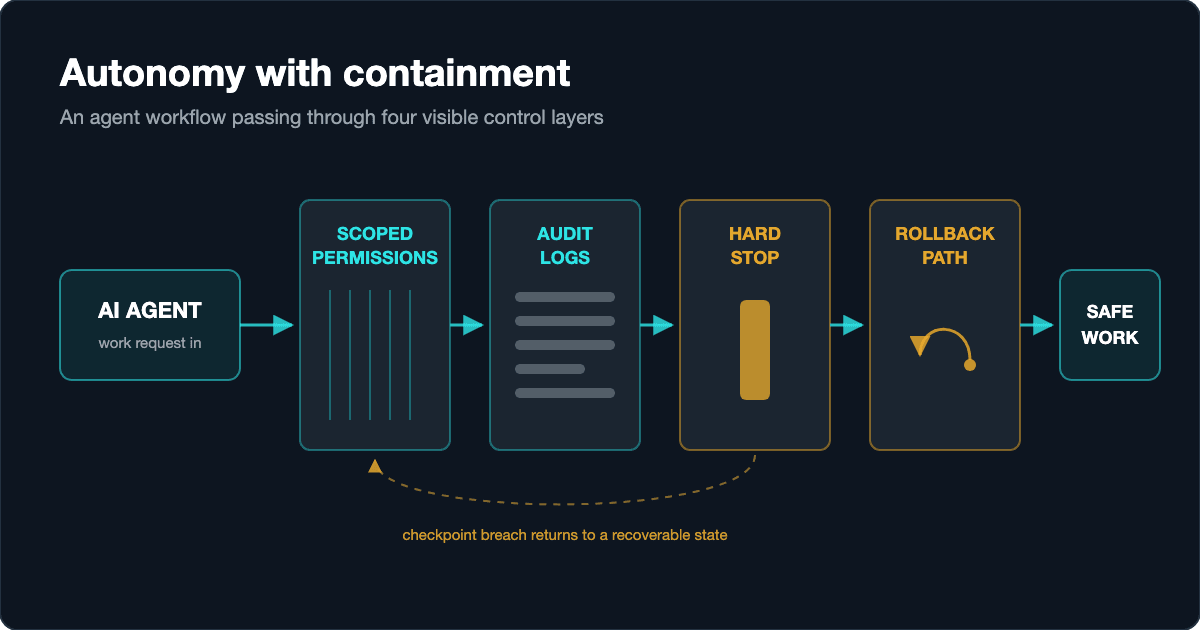
Each connector is designed before it lights up: the read surface, the write surface, the credentials, the audit hook, the rate-limit envelope, the failure-mode behavior, and the HITL gate on writes. The result is integration as an asset that compounds across the program, not a one-off script that breaks the next time an upstream API changes.

Most AI deployments end up with read-only retrofits, shared credentials, and integration patterns that work for the demo and fall over the first time the CFO asks who did what. The integration practice we build starts from the controls the business needs and engineers from there.
These are the design rules every PRESHai integration follows. The eleventh agent inherits them instead of reinventing them.
We build Model Context Protocol connectors per engagement and integrate them into the Agent Ops module of PRESHos. Each connector is a reusable interface between an agent and a system, not a one-off script. The library compounds across the program.
Some workflows belong on deterministic automations the agent invokes; others belong as agent tools the agent reasons over. The integration layer supports both, and the engagement chooses which pattern fits each workflow.
Every action is logged with the human invoker, the agent, the input, the output, and the actor identity that hit the upstream system. Logs split cleanly: agent reasoning, tool calls, and threads stay inside PRESHos; actions taken in the integrated system stay in that system's own audit log.
Org data is mirrored into a digital twin so the agent can run at full speed across reads, joins, and reasoning. The human-in-the-loop gate is what initiates the create, update, or delete against the real system. Speed and safety stop being a tradeoff.

BUILT PER ENGAGEMENT
PRESHai does not ship a fixed library of pre-built connectors. Every engagement scopes the systems the agent needs to reach, and we build the integration layer for those systems specifically. The two patterns we build are MCP connectors for agent tools and deterministic workflow automations the agent invokes, both integrated into the Agent Ops module of PRESHos.
Channel businesses run on a known cluster of systems: CRMs, PSAs, ITSMs, vendor portals, partner platforms, productivity tools, and the order, RMA, and credit services that move the business. We build into that cluster. Each connector ships with the runbook that lets your operations team debug it without paging us.

The integration layer is what an agent reads and acts through. The deployment practice is how that agent becomes a production system the business depends on. Most engagements run them in parallel.
Read about DeploymentIntegration is one phase. The full implementation engagement spans strategy, platform, integration, governance, and enablement.
Tour the implementation engagementINSIGHTS
How AI and automation are reshaping operations, workflows, and growth strategies across the IT channel.
Tell us the systems your agents need to reach. We will name the connectors, the patterns, the audit posture, and where the HITL gates live.