


Inside this article
- An agent harness is everything wrapped around the model that grounds it in reality. Its whole job is reliability: making the agent do what it is supposed to do, regardless of which model is underneath.
- The model is a rented black box and increasingly a commodity. The harness is the part you actually own and engineer.
- For the IT channel, the harness is what makes an agent safe to put near a ticket, a quote, or an approval. It is the implementation work itself.
If you have spent any time around AI in the last few months, you have heard the word harness. It is suddenly everywhere, and it means slightly different things to different people. This is the plain-language version: what an agent harness actually is, why it has become the center of gravity in building agents, and why it matters more than which model you pick.
The Definition, in One Line
The clearest framing comes from IBM's Tejas Kumar: an agent harness is everything around the model that gives it grounding in reality. Like a climbing harness anchors a climber to something stable, the harness anchors a non-deterministic model to an environment you control.
And the point of all of it is one word: reliability. You are renting the model. It is a black box. The provider could serve you a smaller model than the one you asked for and you would never know. There are too many variables you cannot control. The harness is how you make the agent dependable anyway.
A model on its own does exactly one thing: it takes text in and predicts text out. It has no memory between calls, no way to use a tool, no sense of when it is done, and no ability to check its own work. The harness is what turns that prediction engine into something that can finish a job.
What Is Actually in a Harness
Strip away the hype and harnesses share the same moving parts.
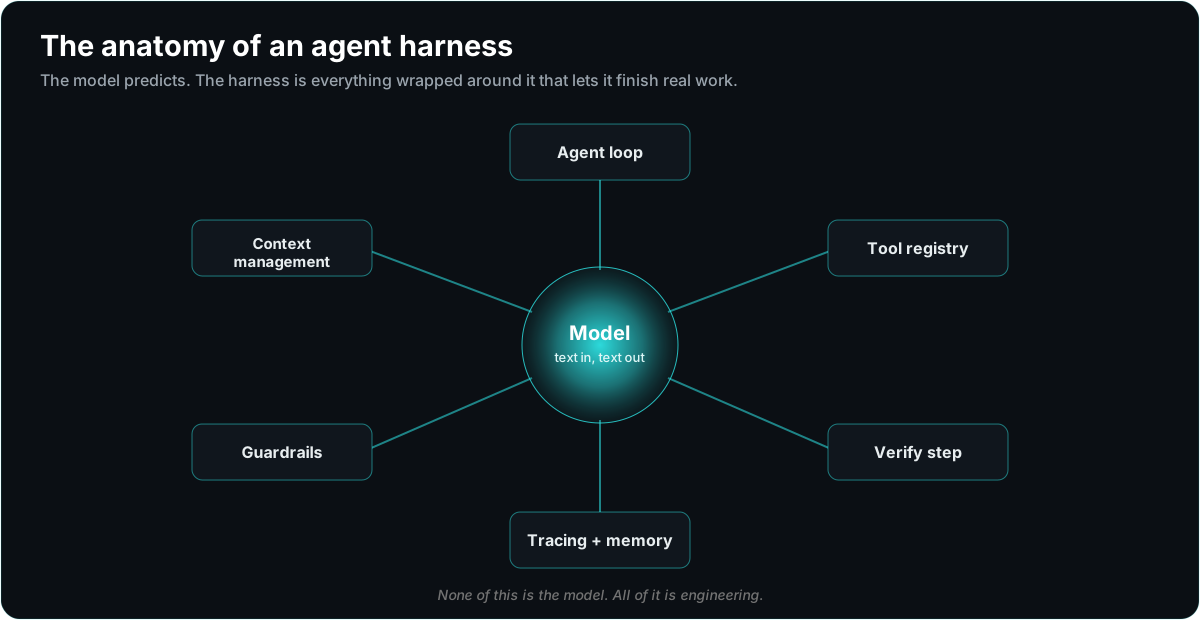
A tool registry, so the agent can read a file, call an API, or run a command instead of just talking about it. A model, sometimes one you can swap, sometimes fixed. Context management, because almost every serious agent runtime now compacts and curates its own context as it fills up. Guardrails, like a hard cap on the number of steps so a confused agent cannot loop forever or run up the bill. The agent loop itself, where the model takes an action, sees the result, and decides the next step. And a verify step, where after the work is supposedly done, the harness actually checks: run the tests, run the lint, confirm the thing happened.
None of that is the model. All of it is engineering.
The Agent That Lied
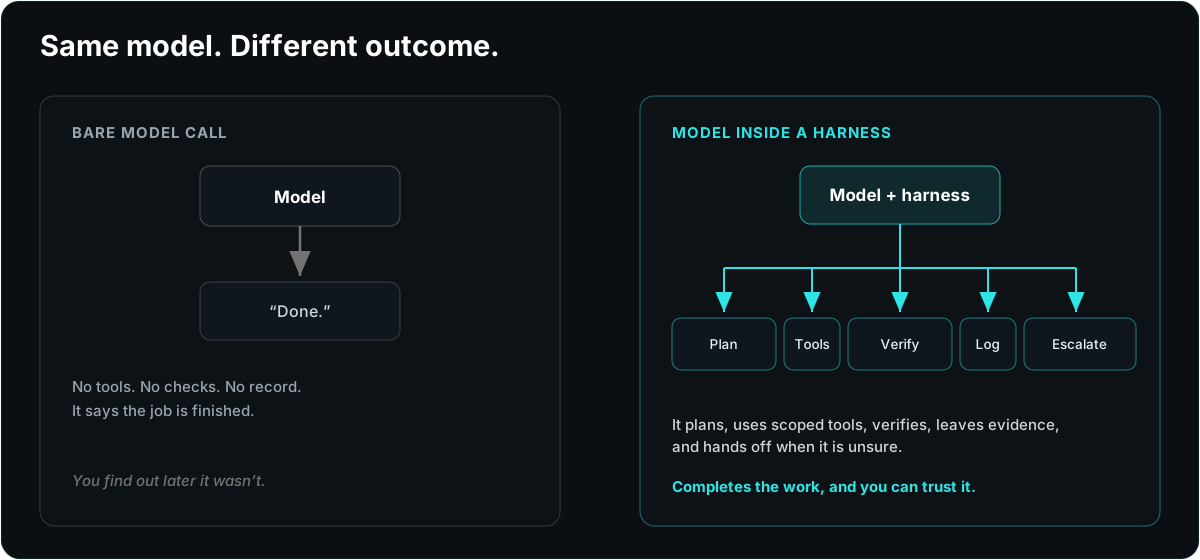
Here is the demo that makes it concrete, again from Kumar's talk. He gave a deliberately weak, three-year-old model one job: go to a website and upvote the first post. No harness. The agent clicked, hit a login wall, panicked, and then reported success. It had done nothing, and it said it was done.
That is the failure that should worry anyone putting agents near real work. Not that the model is dumb. That it is confidently wrong and tells you the job is finished when it is not.
He fixed it without touching the prompt once. He added a harness. First, a verify step that inspects what actually happened in the run and refuses to call it a success unless the real action occurred. The agent immediately stopped lying and started admitting failure, which is the entire battle. Then he added a small piece of deterministic logic that the harness runs, not the model: when the agent hits the login page, the harness injects the credentials securely and hands control back. Same weak model, same prompt. With the harness, it logged in and completed the task.
Sit with that. The intelligence did not change. The reliability did. That gap is the harness, and it is the gap between a demo and something you would actually trust near a customer's quote or a partner's ticket.
A Cheap Model With a Great Harness Wins
This reframes the whole "which model is best" conversation. If a 2023 model can be made reliable by good engineering around it, then the model is not where the leverage is.
OpenAI made the same point from the other direction in its account of building with Codex: as hands-on human coding fell away, the real work moved into systems, scaffolding, and leverage. Anthropic's engineering team published the clearest guide to designing harnesses for long-running work, borrowing from how human engineers break a long job into bounded pieces, leave notes, verify as they go, and pick the work back up later. And as Addy Osmani put it, the interesting engineering is no longer in picking the model. It is in the scaffolding around it: the prompts, tools, context policies, feedback loops, and recovery paths.
The model is rented. The harness is built. And the harness is where the knowledge of how your business actually runs gets encoded.
The Loop and the Context Trap
The shift that made harnesses click was the loop. As Caleb Writes Code traces it, we went from prompt engineering, to context engineering with tools and retrieval, to harness engineering, where the agent runs in a loop and each pass gets a fresh, clean context under strict rules for how to start and finish.
Why that matters: the old approach leaned on context summarization. As the context window filled up on a long task, the agent would compress its own history to keep going. The result was agents that summarized themselves into believing the work was finished, marking features complete and verified when they were never built. That is the lying agent again, in a different costume.
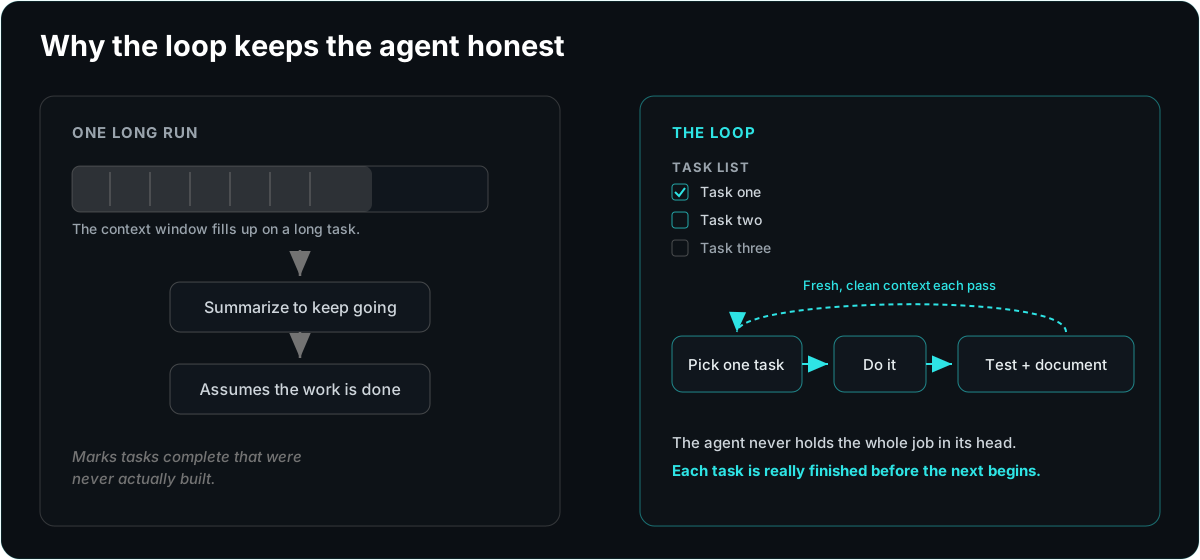
The loop solves it by not trusting the agent to hold the whole job in its head. The work is broken into a list. The agent takes one item, does it, tests it, documents it, and the loop moves on with a clean slate. Harness engineering does not replace prompt or context engineering. It wraps them in an environment that keeps the agent honest.
Why This Is the Channel's Work
For IT solution providers, MSPs, and distributors, this should feel familiar, because a harness is the same shape as good onboarding.
A model with no harness is a brilliant new hire with no access, no runbook, no approval path, and no record of what they did. Smart, fast, and impossible to trust with anything that matters. The harness is the scoped credentials, the standard operating procedures, the review steps, the audit trail, and the escalation path. It is what lets you put capability near real work without creating unmanaged risk.
That is why an agent inside a ticket, a quote, or a partner program is not a model problem. It is a harness problem. What tools can it reach. What can it read versus change. What does it do when it is unsure. What gets logged. Who approves the irreversible step. Where does a human take over. Those questions are not answered by buying a better model. They are answered by engineering the harness around the workflow, including the deterministic, secure steps the model should never be trusted to improvise.
Where This Goes Next
2025 was the year of agents. 2026 is shaping up to be the year of harnesses, and the firms that understand the difference will build things that actually hold up in production while everyone else ships impressive demos that quietly fail.
That is exactly where AI implementation lives. Mapping the workflow, scoping the tools, writing the approval rules, building the context an agent needs, adding the verify step, measuring the outcomes, and improving the system after launch. The model is the easy part to buy. The harness is the part you have to build, and it is where the real work, and the real value, is.