
Inside this article
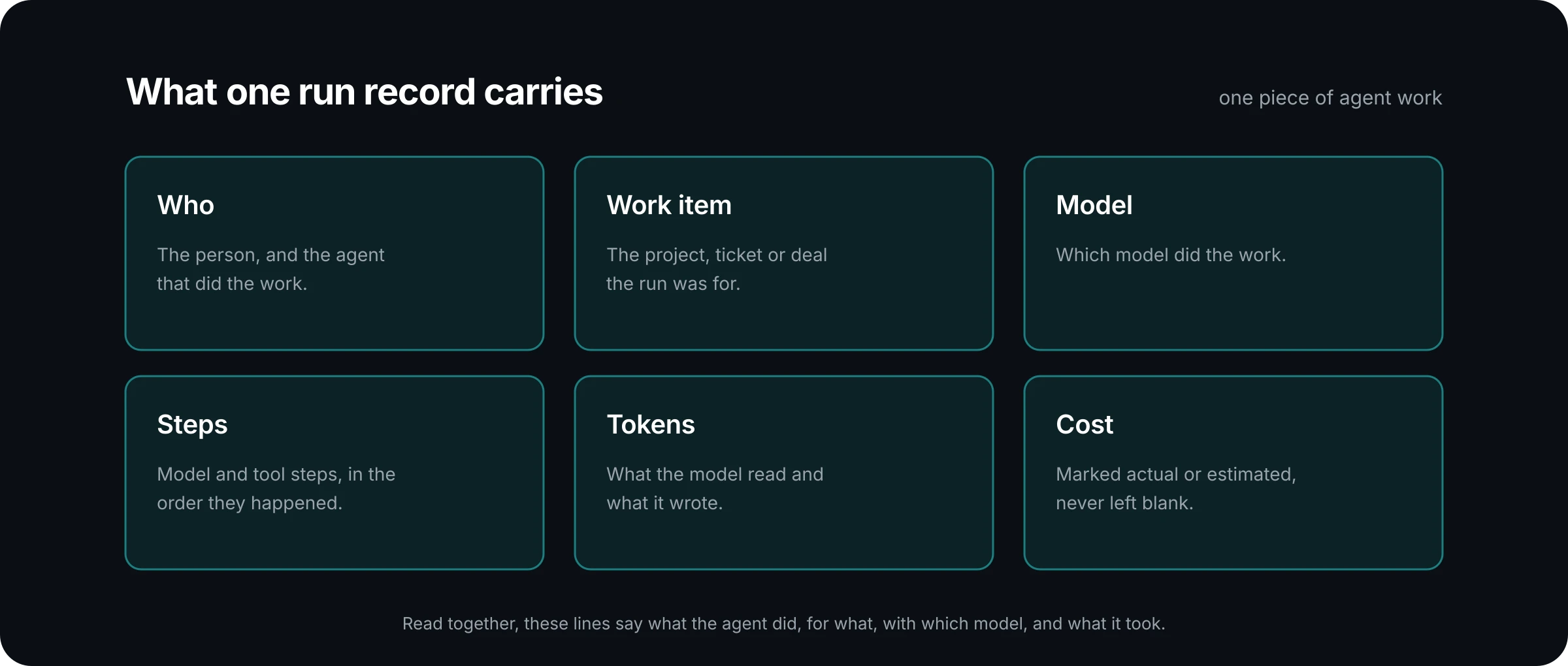
- A run is one piece of agent work, kept with its steps, its tokens and its cost. Reading a run record tells you what the agent did and what it took.
- Cost follows tokens, and tokens follow how much the agent read, how many steps it took and which model did the work. A cost should always say whether it is actual or estimated.
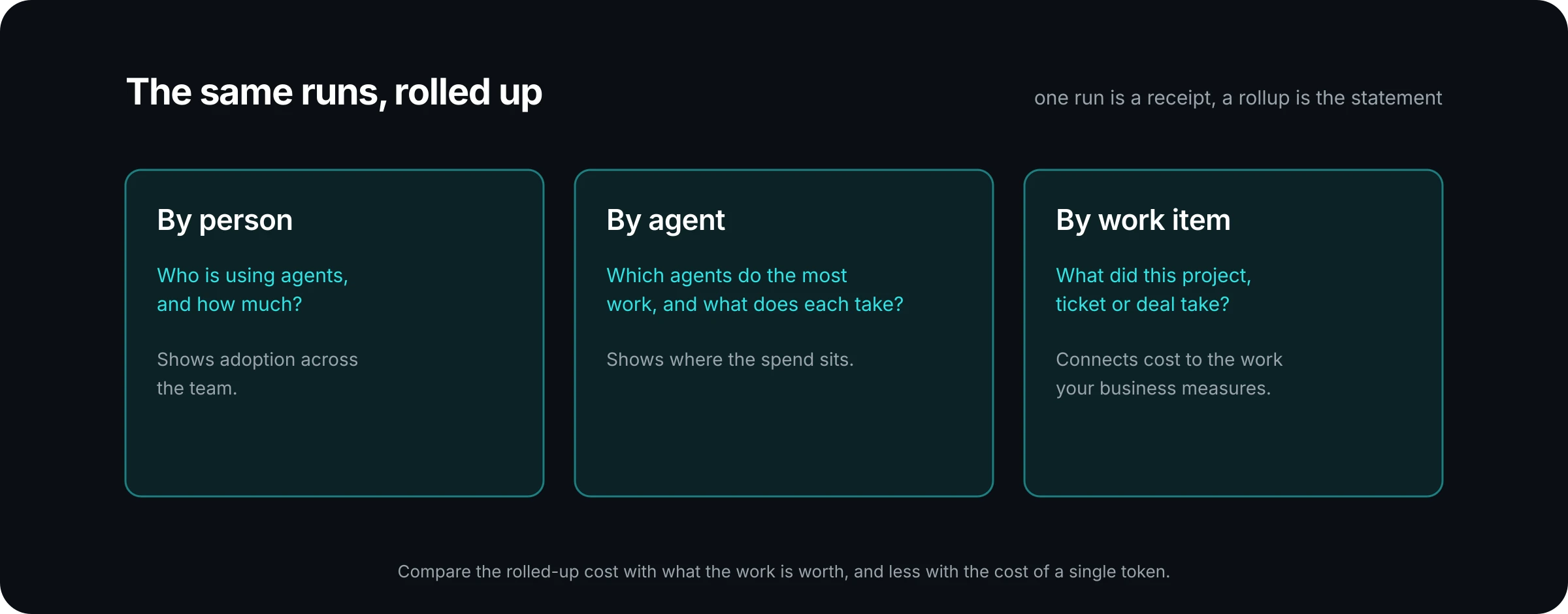
- A single run is rarely the useful number. Roll runs up by person, by agent and by the work they were for, then compare the total with what the work is worth.
Finance and operations leaders are used to reading a cloud bill or a time sheet. Agent work needs the same kind of reading, and it is simpler than it looks. There are only a few numbers, and each one answers a plain question.
This article walks through a run record line by line. It uses PRESHos as the example, where every run is kept with its steps, tokens and cost. The reading skills apply to any platform that shows you its usage.
What is a run?
A run is one piece of work by an agent, from the request to the result. Someone asks an agent to prepare a renewal summary. The agent reads the account, checks open tickets, drafts the document and reports back. That is one run.
A longer conversation with an agent is a session, and a session can hold several runs. Each time the agent goes away, does work and comes back, that is another run on the record.
Inside a run are steps. Some steps are the model thinking and writing. Others are tool calls: reading a record, searching the wiki, opening a file. The steps are kept in the order they happened, so you can follow the work from start to finish.
What do tokens measure?
Tokens are the unit that AI models count in. A token is a small piece of text, roughly a short word or part of a longer one. Models count everything they read and everything they write in tokens, and providers charge by the token.
A run record usually splits tokens into a few kinds:
- Input tokens are what the model read: the instructions, the conversation so far, and any records or documents the agent pulled in.
- Output tokens are what the model wrote: its reasoning, its messages and its drafts.
- Cached tokens are input the model had already seen in an earlier step. Providers usually charge less for these.
One point surprises most people the first time. An agent that takes ten steps reads its growing history on every step. So input tokens are usually the largest number on the record, even when the agent writes very little.
What is the difference between an actual and an estimated cost?
An actual cost is the amount reported for the model call when it was made. An estimated cost is worked out afterwards from the token counts and the listed price of the model.
Both are useful. They are not the same thing, and a report should tell you which one you are looking at. In PRESHos, costs are marked actual or estimated, never left blank. A blank or a zero is the dangerous case, because it reads as "free" when it means "unknown".
When you read a cost report, check two things. First, is each figure labelled? Second, are estimates based on the price at the time of the run? A historical run should not change its cost because a provider changed its prices later.
Why does the same job cost more on some days?
Because the cost of a run is driven by what happened inside it. Four things move the number.
How much the agent read. An account with three open tickets is a smaller read than an account with three hundred. Long documents, long histories and large records all add input tokens.
How many steps it took. Each tool call and each round of thinking adds to the total. A run that found what it needed on the first search costs less than one that searched six times.
Which model did the work. Models are priced differently. In PRESHos the model is chosen per agent, and every run records which model it used, so you can compare like with like.
Whether work was repeated. A run that hit an error and tried again, or a draft that was rejected and revised, used tokens twice. That is often money well spent, and it should still be visible.
Here is an example. Two runs of the same renewal-summary agent show very different costs. Opening both records shows why: the first account had a short history, and the second had two years of tickets that the agent read in full. The fix is a change to the agent's instructions, so it reads the last two quarters by default. You could not have found that from a monthly total.
How do you roll run costs up into something a manager can use?
One run is a receipt. Managers need the statement.
In PRESHos, run costs roll up by person, by agent and by the work they were for.
Each view answers a different question.
By person shows adoption. Who is delegating work to agents, and who is not? High usage is often a good sign, and worth learning from.
By agent shows where the spend sits. A team agent that runs all day will lead the list. That is expected. The question is whether its cost per run is steady.
By work item shows what the work took. This is the view that connects cost to value, because the work item is the thing your business already measures: the project, the ticket, the deal.
The runs and cost page shows the report in the product.
What should you compare the cost against?
A cost on its own says little. Compare it with something.
Compare it with the work it replaced or sped up. If an agent prepares a business review that used to take a person half a day, the cost of the run sits against half a day of that person's time.
Compare it with itself over time. A steady cost per run means the agent is behaving consistently. A rising one means its inputs are growing or its instructions need attention.
Compare it across models. If a simpler model does the job to the same standard, the run record will show the difference. The model choice page explains how each agent is set to the model that suits its job.
A few habits make this easy to keep up:
- Attach agent work to a work item, so the cost has somewhere to land.
- Review the most expensive runs each month and open the steps.
- Treat an unlabelled or missing cost as a question to chase.
- Look at cost per piece of work, and less at cost per token.
What the numbers are for
The point of reading run costs is to be able to say, with evidence, which work AI did, which model did it and what it took. That lets you decide where agents are worth more of your work and where they are not, using the same discipline you apply to any other operating cost.
If you cannot see what AI is doing in your business today, tell us what you can and cannot see. We will walk through what a run record would show you.